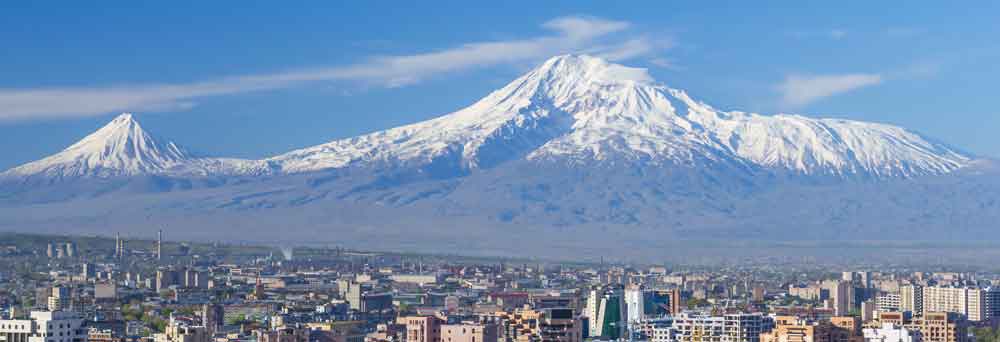
Mount Ararat is the most iconic mountain associated with Armenian history, identity, and biblical tradition. Although located today within the borders of eastern Turkey, it has for millennia stood at the symbolic and historical center of the Armenian Highlands.
When I was a student at Yerevan State University, every morning as I walked or rode to the university, I would see Mount Ararat—Masis and Sis—rising on the horizon. It was not merely a mountain in the distance. There is something profoundly spiritual in that presence, something deeply connected with every Armenian. It is a silent reminder of history, endurance, and belonging.
— Smbat Minasyan
Mount Ararat in Armenian History
Mount Ararat has long occupied a central place in Armenian political and cultural symbolism. In antiquity, it was not merely a geographic landmark but a visible emblem of sovereignty and homeland.

One of the most iconic representations of this symbolism appears in ancient Armenian coinage. Coins from the reign of Queen Erato (1st century BCE) depict Tigranes IV wearing the Armenian royal tiara—a symbol of authority—while Queen Erato stands to his right. Behind them rise the twin peaks of Mount Ararat, Masis and Sis, rendered as a defining backdrop. These images likely reflect the view from the ancient Armenian capital of Artaxata and demonstrate that Ararat was already embedded in royal iconography.
Such coinage illustrates that Armenian rulers consciously associated their authority with the geography of the homeland. The mountain was not only a natural feature but a political and dynastic symbol.
In modern history, Mount Ararat also held direct territorial significance. During the existence of the First Republic of Armenia (1918–1920), Mount Ararat was within the borders of the Republic of Armenia. Its inclusion within the territory of the Armenian state during this period is historically documented and reflected the broader geographic scope of Armenian statehood at that time.
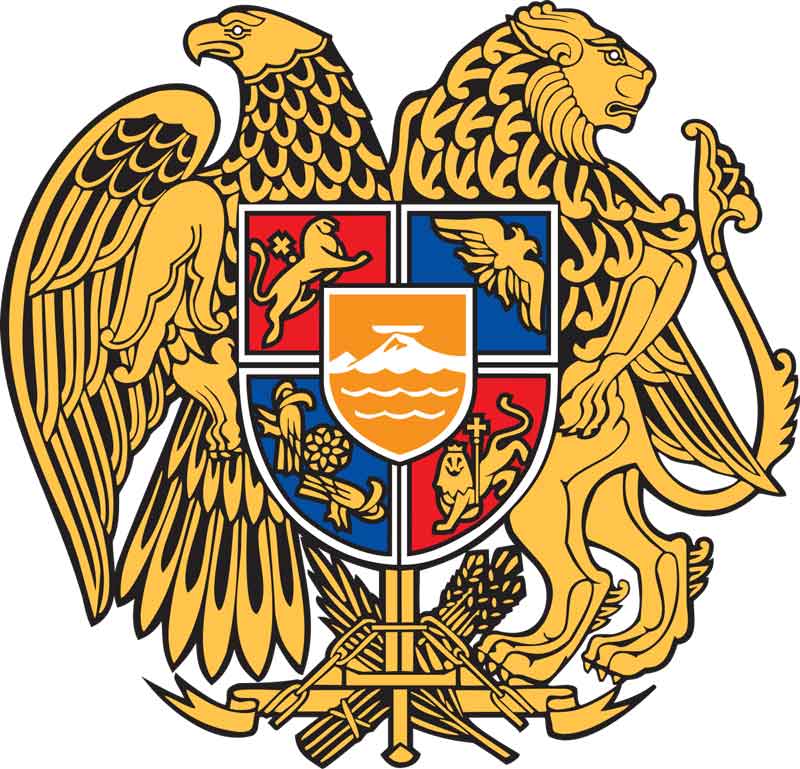
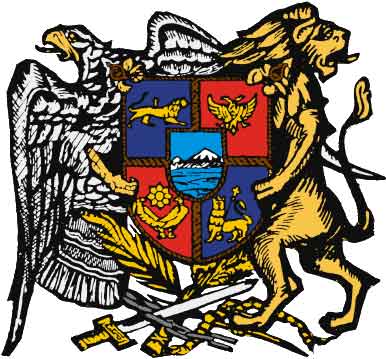
Following the geopolitical rearrangements of the early 1920s, the mountain fell outside the borders of the present-day Republic of Armenia. Nevertheless, Mount Ararat remains prominently depicted on the Coat of Arms of the Republic of Armenia, symbolizing historical continuity, national identity, and the enduring connection between the Armenian people and their historical homeland.
Biblical Tradition: Noah’s Ark and the “Mountains of Ararat”
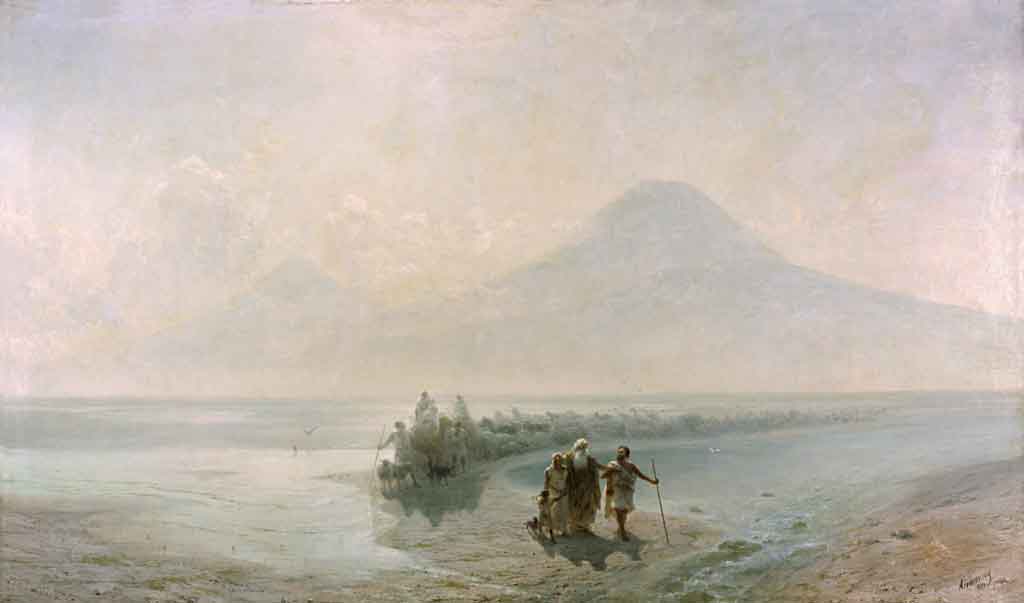
The Book of Genesis states that Noah’s Ark came to rest upon the “mountains of Ararat.”
This phrase refers not necessarily to the single peak known today as Mount Ararat, but to the broader region historically called Urartu/Ararat, which corresponds to the Armenian Highlands.
Modern searches for Noah’s Ark have focused primarily on Mount Ararat itself, contributing to its global recognition. While no verified archaeological evidence of the Ark has been confirmed, the association remains deeply rooted in religious tradition.
Geography and Physical Characteristics
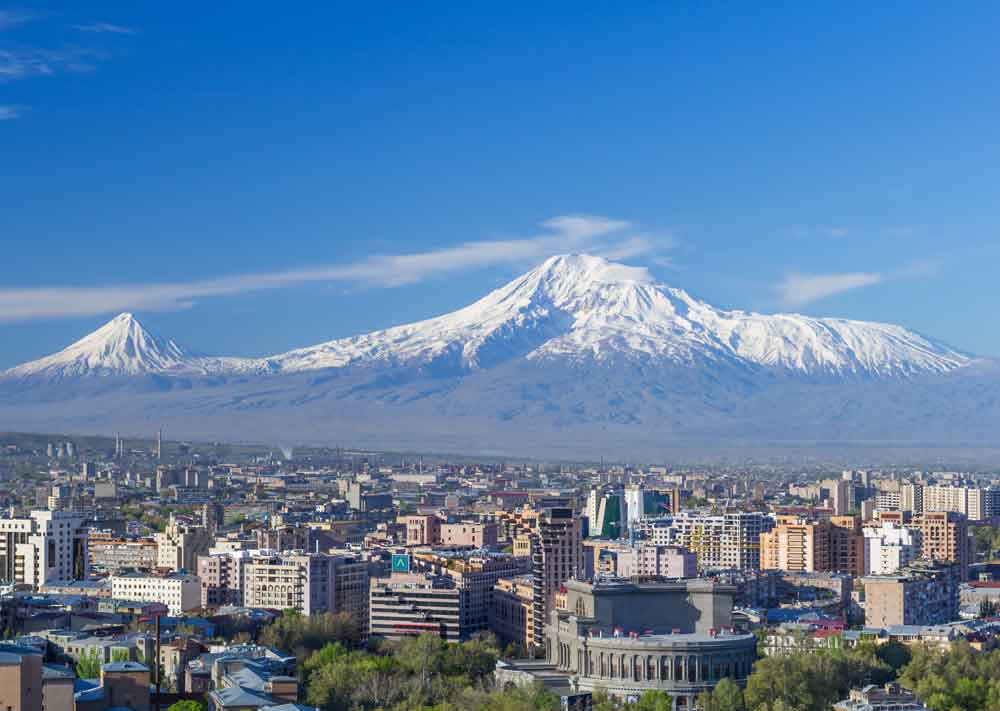
Rising to 5,137 meters (16,854 ft), Mount Ararat is the highest peak in the region and one of the most recognizable volcanic mountains in the world.
Mount Ararat is a dormant stratovolcano composed of two principal peaks:
- Greater Ararat (Masis) – 5,137 m (16,854 ft)
- Lesser Ararat (Sis) – 3,896 m
The mountain dominates the Ararat Plain and is clearly visible from Yerevan and much of central Armenia. Its isolated volcanic formation gives it exceptional topographic prominence, making it both geographically imposing and visually iconic.
Geologically, Ararat forms part of the volcanic system of the Armenian Highlands. Its last recorded eruption occurred in 1840, accompanied by an earthquake and landslide that destroyed the village of Akori on its slopes.
First Ascent of Mount Ararat
The first recorded ascent of Mount Ararat was in 1829 by German naturalist Friedrich Parrot, accompanied by Armenian writer and cleric Khachatur Abovian.
This expedition marked a significant moment in scientific exploration and Armenian intellectual history.
Since then, Ararat has attracted mountaineers from around the world.
Is Mount Ararat an Active Volcano?
Mount Ararat is classified as a dormant stratovolcano.
Its last significant eruption occurred in 1840, though it has shown no confirmed eruptive activity since. Geological monitoring continues, but it is not currently considered active.
Mount Ararat and Armenian Identity
For Armenians, Mount Ararat transcends geography. It appears:
- On the Coat of Arms of the Republic of Armenia
- In Armenian literature and poetry
- In visual art and architecture
- In national memory and historical consciousness
Even though the mountain lies outside Armenia’s present political borders, it remains an enduring symbol of Armenian continuity and cultural survival.
Mount Ararat in Modern Scholarship
Scholarly discussion of Ararat intersects multiple fields:
- Biblical studies
- Caucasus archaeology
- Ottoman and Russian imperial history
- Armenian cultural studies
- Volcanology and geology
Its significance is therefore both historical and interdisciplinary.
Key Facts About Mount Ararat
- Height: 5,137 meters
- Type: Dormant stratovolcano
- Location: Eastern Turkey (Armenian Highlands)
- Biblical Reference: “Mountains of Ararat”
- First Recorded Ascent: 1829
- Last Major Eruption: 1840
Mount Ararat stands at the intersection of geography, scripture, and Armenian history. From ancient royal coinage to the First Republic of Armenia, from biblical tradition to modern state symbolism, it has remained a constant presence in Armenian historical consciousness.
For generations of Armenians, Ararat has been more than a mountain. It is a visible landmark of memory, sovereignty, endurance, and belonging. Though today it lies beyond the borders of the Republic of Armenia, its place in Armenian identity has never been defined solely by political boundaries.
Few mountains in the world embody such a layered and enduring civilizational meaning.